Container Shipping from the UK: Complete 2026 Guide
Container removals, how it works, destinations and average shipping times
A container is the standard way to move a household overseas from the UK, and a container move is a service rather than a box you hire: your mover packs, loads, clears customs and delivers at the other end. This guide covers how the process works, container sizes, FCL vs. LCL, and which guide to read for your destination.
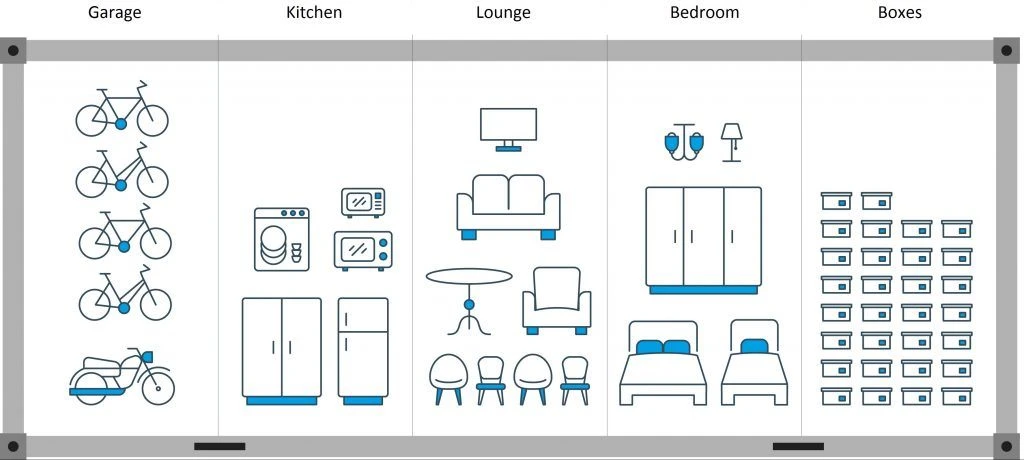
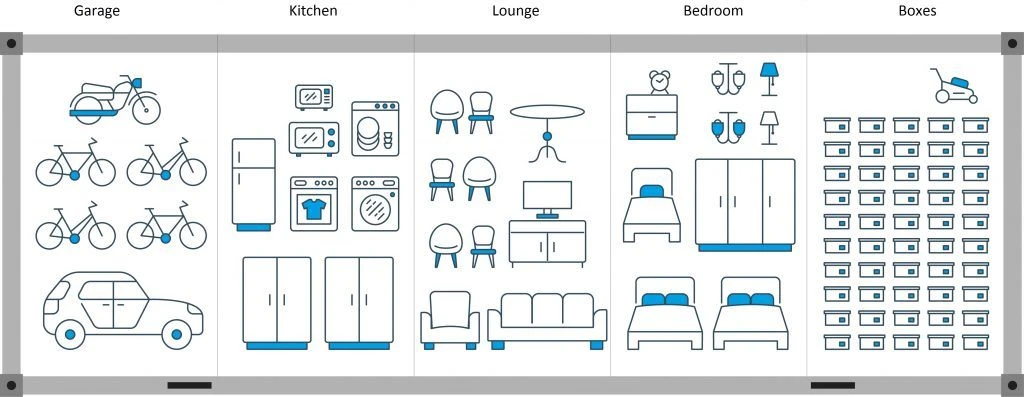
A 20ft container holds around 33 m³ and is usually suitable for a home of up to three bedrooms. A 40ft container holds around 68 m³ and is generally the better choice for four bedrooms or more.
You can have a container to yourself (FCL) or share one with other households (LCL). Sharing is usually cheaper for smaller moves because you only pay for the space you use, although it can take longer.
Your volume is the best place to start. It helps determine the container size, whether FCL or LCL makes sense, and how much you are likely to pay. Use our volume calculator to work it out.
The first thing to work out is how much you are taking. That tells you whether you need a 20ft or 40ft container, or whether sharing a container would be cheaper.
From there, the process is fairly straightforward: choose your shipping option, decide how you want your belongings collected and delivered, find a removal company and prepare the necessary customs paperwork.
Choose a container size. A 20ft container holds around 33 m³ and is usually suitable for homes of up to three bedrooms. A 40ft container holds around 68 m³ and is generally used for four-bedroom homes and larger moves.
Choose FCL or LCL. With FCL, you have the container to yourself. With LCL, you share it with other shipments and pay for the space you use.
Choose how your belongings will be collected and delivered. Door-to-door is the simplest option, but port-to-port can cost less if you are able to handle some of the transport yourself.
Get a few quotes. Ask international removal companies for quotes and compare both the price and what is included.
Prepare your customs paperwork. Your removal company should tell you what is required at your destination. This will usually include an itemised inventory and proof that the goods belong to you.
UK container shipping companies
Once you know roughly how much you are moving, where you are going and which shipping option you want, you can start comparing removal companies.
International removal companies can handle the whole process for you, from packing and collecting your belongings in the UK to arranging the sea freight, customs clearance and delivery at your destination.
Many offer both full container loads (FCL) and shared container loads (LCL), although the routes and services available vary between companies.
Top 4 container moving companies in the UK
Sirelo works with hundreds of international removal companies across the UK. The companies below specialise in overseas moves and can quote for container shipping to a range of destinations.
International removalsNational movingExcess baggage
What customers are saying
Efficient(22)
Price(19)
Professional(16)
Price(6)
Shipping container sizes: 20ft vs 40ft
For most household moves, the choice comes down to a 20ft or 40ft container. The right size depends on how much you are taking with you, so it is worth estimating your volume before choosing one.
A bedroom count can give you a rough idea, but it is not a precise measurement. A three-bedroom home with relatively little furniture may need much less space than a smaller home filled with large furniture, books and other belongings.
For that reason, use the number of cubic metres as your main guide.
How much furniture can fit in a 20ft container?
A 20ft container holds around 33 m³ and is usually suitable for a household of up to three bedrooms. That could include beds, sofas, wardrobes, appliances, bikes and packed boxes.
Dimensions, volume and load of a 20ft container
Size: 5.9m × 2.4m × 2.6m
Total volume: 33 m³ (approximately 1,179 ft³)
Maximum load: 24,850 kg (54,783 lbs)
How much furniture can fit in a 40ft container?
A 40ft container holds around 68 m³ and is generally the better option for a four-bedroom home or larger. It gives you roughly twice the space of a 20ft container and can also leave room for larger items, including a car where the shipping arrangements and destination rules allow it.
Dimensions, volume and load of a 40ft container
Size: 12.2m × 2.4m × 2.6m
Total volume: 68 m³ (approximately 2,714 ft³)
Maximum load: 30,200 kg (66,577 lbs)
Open-top containers are available for oversized or unusually shaped items. Refrigerated containers are used for temperature-sensitive goods such as food or plants. These are specialist options rather than the usual choice for a household move.
Not sure how much space you need? Our volume calculator gives you an estimate in cubic metres, which you can then use when comparing shipping options and requesting quotes.
FCL vs. LCL: should you share a container?
Once you have a rough idea of your volume, you can decide whether to take a container to yourself or share one with other households.
FCL (Full Container Load) means you have exclusive use of a 20ft or 40ft container. You pay for the container itself rather than just the space your belongings occupy.
LCL (Less than Container Load), or shared-container shipping, means your belongings travel in a container alongside other shipments. You pay for the amount of space you use, usually measured in cubic metres.
For smaller moves, LCL is normally the cheaper option. Once your belongings take up most of a container, having the container to yourself can make more financial sense. The exact point varies by route and quote.
FCL
LCL
Best for
Whole-home moves or anyone who wants more control over the departure
Smaller moves and part loads where keeping the cost down matters most
Cost
Higher upfront, but can offer better value when you have a lot to ship
Lower for smaller shipments because you pay for the space you use
Timing
Can usually be shipped once your belongings are ready
Can take longer because your goods are consolidated with other shipments
Handling
Your belongings stay together in one container
Your belongings are handled as part of a consolidated shipment
For a more detailed comparison of the costs, including when FCL can become better value than LCL, see our Container Shipping Costs UK guide.
Container delivery: How will your container be collected and delivered?
Once you know what you are shipping, you can decide how much of the transport you want the removal company to handle.
Delivery options for container shipping
There are three main options:
Option
What’s included
Door-to-door
The removal company collects your belongings from your home and arranges delivery to your new address. Packing and customs services can also be included.
Drop & fill
A container is delivered to your home for you to load yourself. The company then collects it and handles the shipping. This is less common for household moves.
Port-to-port
You arrange transport to the UK port and collect your belongings from the destination port yourself. This can reduce the cost, but leaves you with more of the logistics to organise.
Door-to-door is the simplest option if you want the removal company to manage most of the move. Port-to-port can be cheaper, but you need to arrange the transport at both ends and deal with more of the logistics yourself.
Sea freight or air freight?
For overseas household moves, the main choice is between sea freight and air freight. Sea freight is slower but much cheaper for large volumes, while air freight is useful when speed matters more than cost.
Moving overseas via sea freight
Sea freight is the standard choice for moving a household internationally. A container can carry furniture, appliances and boxes in large quantities, and the cost per item is much lower than sending the same belongings by air.
Advantages
Lower cost for large volumes
Suitable for whole-home moves
Available on most major international routes
Lower environmental impact than air freight
Disadvantages
Takes longer than air freight
Moving overseas by air freight
Air freight is mainly useful for smaller or urgent shipments. It can get your belongings to the destination in days rather than weeks, but the cost rises quickly with the weight and volume of your shipment.
Advantages
Very fast (typically 1–7 days)
Useful for small and time-sensitive shipments
Disadvantages
Much more expensive than sea freight
Less suitable for large household moves
Higher environmental impact
If you are moving an entire home, sea freight will usually be the more practical option. Air freight makes more sense for a few essentials you need before the rest of your belongings arrive.
What’s included in container shipping?
You do not necessarily have to arrange every part of the move yourself. Depending on the company and the service you choose, you can pay for everything from collection and packing to customs clearance, storage and delivery.
Container moving services
Service
What’s included
Collection and delivery
Collection from your home and delivery to your new address, or transport to and from the ports if you choose a port-to-port service.
Customs clearance
Help with import and export paperwork and customs clearance at the relevant ports.
Packing services
Professional packing and unpacking if you do not want to pack everything yourself.
Storage
Short- or long-term storage at the UK or destination end, where available.
Exactly what is included varies between companies, so check the quote carefully. A low headline price is not necessarily cheaper if you then have to pay separately for packing, delivery or customs handling.
Where are you shipping to?
The basic process is similar wherever you move, but the details can change considerably between countries. Customs paperwork, quarantine rules, import restrictions, ports and transit times all depend on your destination.
The guides below cover the main requirements, costs and transit times for each route.
Destination
What the route involves
Guide
USA
You can ship to an East or West Coast port, which affects both the sailing time and the inland journey afterwards. You will need a detailed inventory for US customs, and household goods that meet the relevant conditions can generally enter duty free.
Australian biosecurity checks are an important part of the process. Plants, seeds and some other items are restricted, while wooden goods may be inspected for pests. Your inventory and packing need to meet Australia’s requirements.
You will need an itemised inventory, including details such as values and, for some mechanical goods, makes and serial numbers. If you are also bringing a car, there are additional import requirements to check.
Shipments usually arrive through Jebel Ali or another UAE port and are checked against local import rules. Some goods, including medicines, plants and food, may require approval, while restricted items cannot be imported.
These are typical sea-freight transit times, not guaranteed door-to-door delivery dates. Your total moving time can be longer once collection, consolidation, customs clearance and final delivery are included.
Route
Typical shipping time
UK → USA
4–8 weeks
UK → Canada
4–8 weeks
UK → Australia
8–16 weeks
UK → UAE
3–6 weeks
Moving somewhere in Europe?
If you are moving to mainland Europe, you probably will not need a shipping container at all. Most household moves from the UK to Europe go by road, with the main choice being whether your belongings share a vehicle with other households or travel in a vehicle of their own.
That is a different type of move from international container shipping, so start with our guide to European removals from the UK.
How to pack a container for overseas
Your removal company will normally handle the packing if you choose a full-service move, but it is still useful to know what good packing involves. Proper packing protects your belongings during a long journey and makes customs inspections easier.
If you are packing yourself:
Declutter first. Shipping furniture and household goods overseas is expensive, so there is little point paying to move things you no longer want.
Use strong packing materials. Double-walled boxes, bubble wrap, packing paper and good-quality tape will give your belongings better protection.
Put heavier items at the bottom. Keep lighter and more fragile belongings towards the top of the load.
Take large furniture apart where possible. This can save space and reduce the risk of damage during loading and unloading.
Keep small parts together. Put screws, bolts and fittings in labelled bags and attach them to the relevant piece of furniture.
Label your boxes. Include the contents and destination room, and clearly mark anything fragile.
Make a complete inventory. Your mover will need an itemised list for customs, and an accurate inventory can help avoid delays at the destination.
Shipping a car overseas: container vs. RoRo
If you are taking a car with you, you can usually choose between container shipping and roll-on/roll-off (RoRo). The better option depends on the destination, the type of vehicle and whether you are shipping household goods at the same time.
Container shipping for cars
Your car is secured inside a 20ft or 40ft container.
You may be able to ship the car alongside your household belongings, which can make better use of the container and reduce the need for a separate vehicle shipment.
The container gives the vehicle more protection from weather and other potential damage during transit.
Roll-on/roll-off (RoRo) shipping
The car is driven onto the ship and secured on a vehicle deck.
It is usually cheaper than container shipping when you are shipping a vehicle on its own.
The vehicle is more exposed than it would be inside a container.
The paperwork and import requirements also vary by destination. Before shipping, you may need documents such as your V5C logbook, proof of insurance and proof of identity. Your removal or vehicle shipping company should confirm exactly what is required for your destination.
Once you know roughly how much you are taking and where you are going, the next step is to get a few quotes. Compare what each company includes as well as the headline price, particularly for packing, customs clearance, delivery and storage.
Sirelo can help you compare international removal companies and request up to five free quotes.
Request up to 5 free quotes for your container move
Compare container shipping companies and get the best price for your overseas move
Sign up and receive our tips for moving house internationally & other guides
Sirelo uses the information you provide to us to contact you about our relevant content and services. You may unsubscribe at any time. For more information check our privacy policy
Thank you for subscribing
Frequently asked questions
What does a shipping container moving service offer?
A container moving service covers the full relocation process: packing, loading, international transit, customs clearance, and delivery at the destination. Most companies also offer storage, vehicle shipping, and optional marine insurance.
What decides the cost of shipping a container overseas?
Four things: your volume, the destination, whether you take a full container (FCL) or share one (LCL), and how much of the packing, storage, insurance and customs work you hand to the mover. For current 20ft and 40ft price ranges by destination, see Container Shipping Costs UK.
What's the cheapest way to ship furniture abroad?
LCL (shared container) combined with port-to-port delivery is usually the most affordable option. Choosing sea freight over air freight and keeping add-ons to a minimum will also keep the cost down.
What sizes do shipping containers come in?
Two standard sizes are used for household moves: a 20ft container, which holds 33 m³ and can hold up to a three bedroom home, and a 40ft container, which holds 68 m³ and suits homes with four or more bedrooms. Neither has to be filled: you can share a container with other households (LCL) instead of taking one of your own, which costs less but usually takes a little longer. Container Shipping Costs UK compares the costs of the two options.
How do I organise a shipping container moving service?
Prepare an inventory list and gather required customs documents
Confirm your booking and track your shipment until delivery
How long does it take to ship belongings abroad?
Transit time depends on the route, the sailing schedule and whether you share the container. A shared container (LCL) is usually a bit slower than one of your own: it sails once it is full rather than when you are ready, and it is unloaded and separated at the far end before your part of it is delivered. Air freight is faster, but considerably more expensive.
Average container shipping transit times
UK → USA 4–8 weeks UK → Canada 4–8 weeks UK → Australia 8–16 weeks UK → UAE 3–6 weeks
We and our partners use technologies such as cookies on our website to enhance your user experience, personalise content and ads, provide features, and analyse our traffic. Click the green button below to consent to the use of this technology on our website. For further details or to change your consent choices at any time - see our Cookies Policy.
Cookies are text files containing small amounts of information which are placed on your computer or device when you visit our website. We use cookies in order to give you the best experience possible. Cookies help us to distinguish you from other users of our website. That way we can make sure you can browse through our website more easily and we can improve our website if necessary.
When you first visit our website, we (sirelo B.V.) do not set cookies on your device (other than necessary cookies) unless you accept/enable all cookies, or select your own cookie preferences.
You can manage your cookie preferences at any time here. However, please be aware that if you choose not to enable cookies it may prevent you from taking full advantage of the website and some parts of the website may fail to work.
What cookies do we use?
We use four types of cookies, which we describe in this section. You can also find a full list of all different first and third-party cookies that we use in the table below.
Necessary cookies: Necessary cookies help make a website usable by enabling basic functions like page navigation and access to secure areas of the website. The website cannot function properly without these cookies.
Preference cookies: Preference cookies enable a website to remember information that changes the way a website behaves or looks, like your preferred language or the region that you are in.
Statistics cookies: Statistic cookies help website owners to understand how visitors interact with websites by collecting and reporting information anonymously.
Advertising cookies: Advertising cookies are used to track visitors across websites. The intention is to display ads that are relevant and engaging for the individual user and thereby more valuable for publishers and third party advertisers.
Necessary cookies (1):
Cookie name
Provider
Purpose
Type
Expiry
_cfduid
Sirelo.co.uk
Used by the content network, Cloudflare, to identify trusted web traffic.
HTTP
29 days
Preference Cookies (1):
Cookie name
Provider
Purpose
Type
Expiry
cookieaccepted
Sirelo.co.uk
Used by the website owners to keep track of your preferred cookie settings.
HTTP
29 days
Statistics cookies (5):
Cookie name
Provider
Purpose
Type
Expiry
_ga
Sirelo.co.uk
Registers a unique ID that is used to generate statistical data on how the visitor uses the website.
HTTP
2 years
_gat
Sirelo.co.uk
Used by Google Analytics to throttle request rate.
HTTP
1 day
_gid
Sirelo.co.uk
Registers a unique ID that is used to generate statistical data on how the visitor uses the website.
HTTP
1 day
_hjid
Sirelo.co.uk
Sets a unique ID for the session. This allows the website to obtain data on visitor behaviour for statistical purposes.
HTTP
1 year
_hjTLDTest
Sirelo.co.uk
Detects the SEO-ranking for the current website. This service is part of a third-party statistics and analysis service.
HTTP
Session
Advertising cookies (1):
Cookie name
Provider
Purpose
Type
Expiry
_hjIncludeInSample
Sirelo.co.uk
Determines if the user’s navigation should be registered in a certain statistical placeholder.

 Back
Back


 Network of 700+ movers
 200,000 moves annually